|
index
555 touch sensor
air mike
amplify your toy
box your toy
circuit sniffing
clock tickling
contact mike
electret mike
hack the clock
laying and hacking
laying of hands
light theremin
make a cable
mapping
pickup
piezo driver
resistors
soldering
sudomini
synthesis
tape head
|
This circuit is based on the misuse of an IC never intended for making sound.
See Handmade Electronic Music, Chapter 18...
You will need:
- A plastic prototyping board ("breadboard"), e.g. Rapid online part number 34-0650
- 1 CMOS Hex Schmitt Trigger Integrated Circuit (74C14, CD4584 or CD40106), e.g. Rapid online part number 83-0482.
- Assorted resistors, capacitors, pots, and photoresistors.
- 0.1uF = 100nF = 100000pF capacitor
- 100K resistor
- Optional: Some small signal diodes, such as 1N914, Rapid part number 47-3116.
- Some solid hookup wire.
- A plug to match your amp.
- A 9-volt battery and connector (or other power supply).
- A (battery) powered mini-amplifier.
- Hand tools.
- You may find this capacitor converter useful: http://www.justradios.com/uFnFpF.html
- Capacitance code calculatorhttp://www.electronics2000.co.uk/calc/capacitor-code-calculator.php
- NB As noted above, in order to hear the sound created by the chip, you will need to send the output to a powered amplifier.
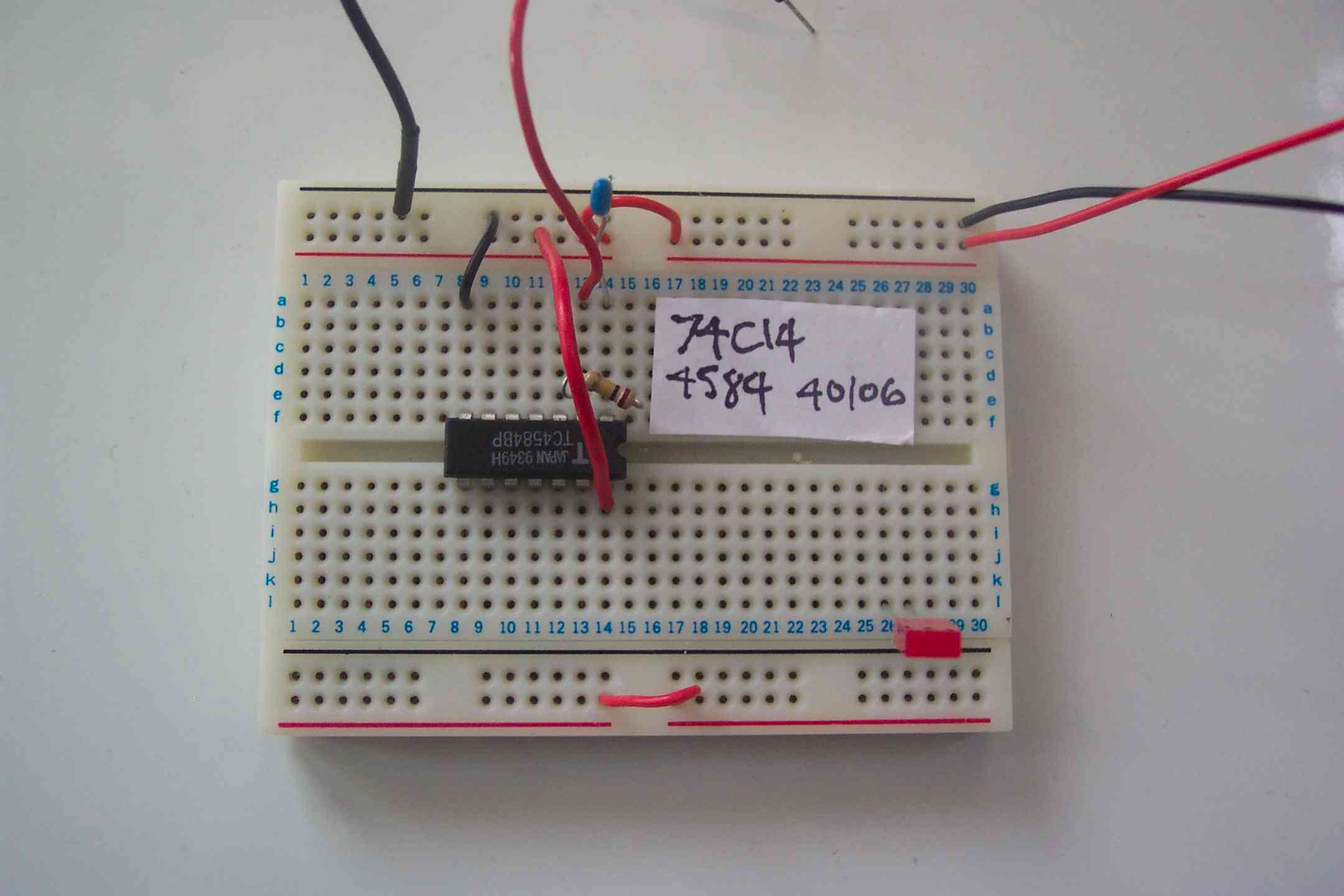
Photograph of the circuit
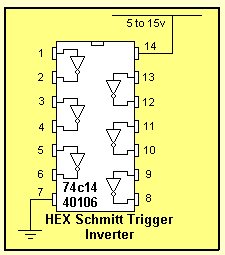
A schematic of the IC
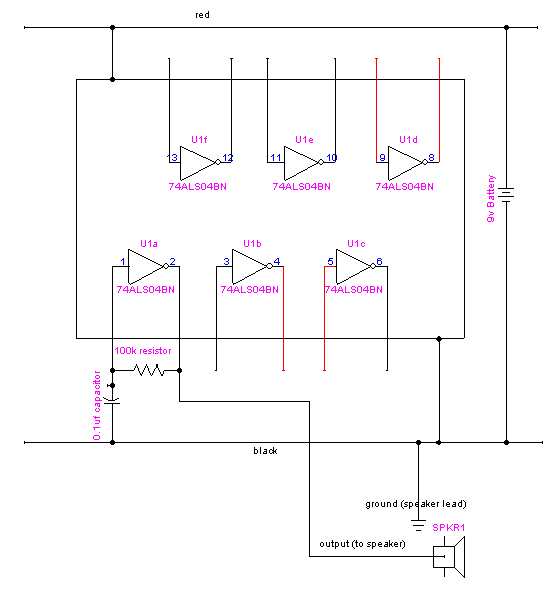
A schematic of the IC being used as a synth!
The idea is to utilise the circuitry of a simple logic switch as the basis for a synthesiser; the misuse of an IC never intended for making sound.
 The Task The Task
- Assemble the above components.
- Read this document (you'll need a password to open it) [9MB]
- Assemble the unit - you should follow the instructions at least until the section entitled 'Your First Schematic' (first edition). Please go on as far as you can after this, but at least get to this point.
- Check that it works
- Experiment with different parts - resistors particularly. Try a potentiometer, try using electrodes, or just wires (lick your fingers). Try using LDRs. Document your findings from these experiments in your logbooks
- Optionally try adding another 'voice'. See the document above for details.
- Document the process with plans, photos, recordings and, yes, videos of it and of it working!
- Media files
You must submit media files, such as video, audio or image files, but please ensure that video files are compressed to a reasonable degree. You should never submit dv files, but compress these to mp4. You should submit no file that is greater in size than 25MB/minute.
- Added value
By completing the details of the task you will achieve at least a pass mark. By imaginatively and creatively considering how you might implement the task originally you can add value to your submission, and this added value may increase your mark significantly. Even when making videos of short demonstration tasks try to consider musical and performance criteria.
- Suggested questions to consider answering in your logbook
- What does this task tell you about the nature of synthesis in particular with regard to more complex commercial digital synthesisers?
- Include all these components in one section of your logbook. Include images within the logbook, and any audio or video recordings alongside.
- Submit your logbook to the i-Centre by 2pm on Tuesday 8th May 2018
|
|